- Your cart is empty
- Continue Shopping


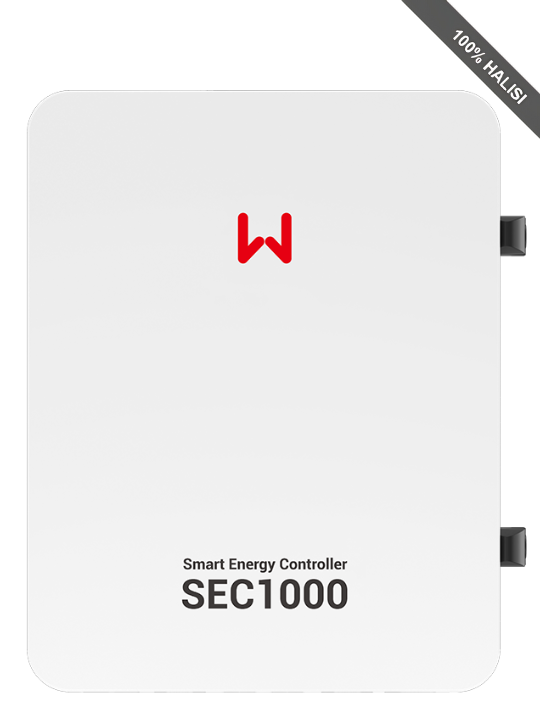
GoodWe – Smart Energy Controller Hybrid and Grid – SEC1000
GoodWe – Smart Energy Controller Hybrid and Grid – SEC1000
GoodWe – Smart Energy Controller Hybrid and Grid – SEC1000


- Intelligent control for hybrid and grid-tied solar systems
- Real-time data monitoring and analysis through SEMS portal
- Automatically regulates active power output and power factor
- Supports zero export and power limit control to the grid
- Enhances system efficiency through smart energy distribution
- Compatible with GoodWe inverters for seamless operation
- Compact design with integrated three-phase meter and control board
The GoodWe Smart Energy Controller (SEC) is a dedicated intelligent control unit developed by GoodWe. When paired with a GoodWe solar inverter, the SEC enables real‐time data collection and analysis of a solar power plant. It can automatically adjust key parameters such as active power output, power factor, AC export to grid, etc., enabling effective allocation of system resources between self‐consumption, export and storage.In essence this is a compact “smart box” that sits alongside the solar inverter strings (and three‐phase meter board) to give real‐time visibility and control over multiple inverter/string outputs and to integrate with GoodWe’s monitoring/management system (SEMS).
Features & Benefits
- Real-time monitoring : The SEC collects data from each inverter/string and gives a real-time view of system performance. This enables faster fault detection, performance optimisation and better operational awareness.
- Active power output adjustment : The SEC can dynamically adjust the active (real) power output of the solar field according to defined limits or strategies (for example, to match load or grid constraints).
- Export power limiting/control : It can enforce limits on AC power exported to the grid, which is useful if local feed-in tariffs or grid rules require a cap on exported energy.
- Power-factor / reactive power control : The SEC supports adjusting power factor or reactive power to help meet grid code requirements or to improve performance (e.g., reduce grid losses).
- String-level inverter control via SEMS : By integrating with GoodWe’s SEMS platform, each string/inverter can be monitored and controlled remotely (configuration, fault logs, performance trends).
- Compact, rugged form-factor : With IP65 protection and low power consumption (≤10 W), the SEC is suitable for deployment in Tanzanian environments (heat, dust, humidity) and for continuous operation.
- Hybrid & Grid readiness : The fact that there is both the on-grid version (SEC1000) and storage‐compatible version (SEC1000S) means the system can scale from standard grid-tied solar to hybrid solar + battery storage systems.
Use Cases
- Residential rooftop solar with export limits: A homeowner in Dar es Salaam installs a GoodWe inverter system. The utility allows export up to a certain level or discourages large exports. By installing the SEC, the homeowner can self-consume more and limit export as required, monitor string performance, and optimise design accordingly.
- Commercial/industrial site with large rooftop or ground-mounted PV: A warehouse or factory in Tanzania installs multiple GoodWe inverters across strings. The SEC enables centralised monitoring and adjustment of active/reactive power, export caps, and better operational control — reducing downtime or flaring losses, improving grid compliance.
- Hybrid solar + battery storage systems: For facilities where load-shedding is frequent, a hybrid solar + storage system is installed. The SEC1000S variant can integrate with the storage side (inverters + meters) to optimise when to export, when to store, when to consume, and run the system according to the business’s tariff structures and backup needs.
- Mini-grid or remote site installations: In off-grid or weak‐grid areas of Tanzania, where micro-grids run with export constraints or self‐use priority, the SEC can help manage the solar field, dynamically limit export to stabilise grid, adjust reactive power to support voltage, and integrate with GoodWe’s monitoring for remote operation/maintenance.
- Utility/tender-based large scale installations: For a large project where multiple GoodWe inverters are deployed across a site and grid export quotas or reactive power requirements apply (for example industrial parks or POA (pool of accounts)), using SEC enables centralised control, ensures compliance with grid code, and enhances returns by optimising export versus self‐consumption.
Value Propositions
- Enhanced system performance & visibility: Installing the SEC gives system owners and installers greater visibility and control over solar assets — string-level monitoring, proactive fault detection, performance analytics.
- Better compliance with grid regulations: With the ability to limit export, adjust reactive power or power factor, the system is well placed to meet Tanzania’s grid operator requirements (e.g., voltage regulation, export caps).
- Improved ROI: By optimising self‐consumption, reducing wasted export or curtailment, and improving uptime through monitoring, system owners can achieve better ROI over the lifetime of the PV plant.
- Scalability for hybrid/storage: As Tanzania increasingly adopts battery storage (for backup, load-shifting, demand-time optimisation), the SEC1000S variant provides a seamless path from purely grid-tied to hybrid systems under the same ecosystem.
- Reduced maintenance costs: Remote monitoring and control reduce the need for onsite manual troubleshooting, lowering operational expenditures.
- Brand reliability: GoodWe is a globally recognised inverter/energy‐management brand. For Tanzanian installers and end-users, this means supply chain reliability, warranty support and access to monitoring tools (SEMS) that support after-sales.
- Future-proofing installations: The inclusion of features like reactive power control, export limiting, and integration with storage/inverters means that systems can adapt to evolving regulatory or grid requirements in Tanzania without wholesale hardware replacement.
Local Market Positioning in Tanzania
- Market need: Tanzania’s solar market is growing — both grid-tied rooftop systems and hybrid systems (solar + battery) are gaining traction. There is high value placed on self‐consumption, backup power (due to load-shedding or grid instability), and efficient export. A smart controller like the SEC addresses those needs.
- Installer value-add: For solar installers/dealers in Tanzania, offering the SEC as part of the GoodWe ecosystem differentiates them: they can deliver “smart solar” not just “solar modules + inverter”. This appeals to commercial clients (hotels, manufacturing) and discerning residential clients.
- Regulatory fit: Ensure awareness of Tanzanian grid regulations (such as export limits, interconnection requirements, reactive power/voltage compliance). The SEC’s features (export limiting, reactive power control) map directly to these regulatory constraints — making it a sales argument (“compliance ready”).
- Education & training: Since it is a somewhat advanced device (real‐time data, control, monitoring), working with Tanzanian integrators to provide training, commissioning support, and demonstration systems helps adoption.
- Service & support: Emphasise GoodWe’s global service network, remote monitoring (via SEMS) capabilities, and local service partner availability. For Tanzanian buyers, reliability and after-sales support are key.
- Pricing & value communication: Communicate the value proposition in terms of lifecycle cost savings (improved performance, lower downtime), compliance risk reduction, scalability for storage, and remote monitoring. For the Tanzanian market, cost sensitivity is real, so highlight how the investment in the SEC delivers tangible value rather than just “optional extra”.
- Target segments: Residential + premium homes who want advanced solar system features (monitoring, export control, storage readiness).Commercial buildings, hotels, schools, hospitals looking for performance optimisation and backup/energy-management.Industrial/Manufacturing where grid code compliance (reactive power, export limits) matter and where solar + storage offers business case improvements.Micro-grid or off-grid solar + storage systems in remote regions, where monitoring and export/self-consumption control are crucial.
Technical Specification
| Parameter | SEC1000 (On-grid) | SEC1000S (Storage) |
|---|---|---|
| AC Input Configuration | 3L / N / PE or 3L / PE | 3L / N / PE or 3L / PE |
| Input Voltage Range – Phase Voltage | AC 60 V to 280 V | Same |
| Input Voltage Range – Line Voltage | AC 100 V to 480 V | Same |
| Input Frequency | 50 Hz / 60 Hz | Same |
| Input Current Range | 0 – 5 A (Max) | 5 A (Max) |
| Rated Power Consumption | ≤10 W | ≤10 W |
| Communication Interface with Inverter | RS485 | RS485 |
| Maximum Number of Inverters Controlled | Up to 60 units | Up to 10 units |
| Installation / Environment | Operating temperature –25 °C to +60 °C | Same |
| Ingress Protection | IP65 | IP65 |
| Max. Operating Altitude | 2 000 m | Same |
| Mounting Method | Wall mounting, bracket, pole mounting | Same |
Additional Information
| Weight | N/A |
|---|

Save More
Keep more of your money.With our efficient online operation our savings become your savings

Free Same Day Delivery
Spend over 100,000/- with us and qualify for free delivery in Dar Es Salaam. Standard delivery is just 5,000/-*

100% Warranty Goods
Unlike other online retailers we chose our suppliers carefully ensuring genuine goods backed by genuine warranties

7 Day Return
Something faulty with your product? No problem. We will arrange for an easy pick up and refund of your order within 7 days*.
Shop with complete peace of mind.
*Only available for products delivered in Dar es Salaam
Related products

EVI Power 1000VA/900W Smart Hybrid Inverter, LCD Display, Fast 20A Charging, 2-Year Warranty
Original price was: Tsh 510,000.Tsh 480,000Current price is: Tsh 480,000.

EVI Power 12V 200Ah Deep Cycle Solar Power Battery
Original price was: Tsh 1,000,000.Tsh 950,000Current price is: Tsh 950,000.

EVI Power 51.2V 100Ah LiFePO4 Rack Mounted Battery Pack with LCD Display – 10.24kWh Capacity, 80% DOD 7000+ Cycles, 5-Year Warranty – EVIA100LFP-51.2
Original price was: Tsh 2,900,000.Tsh 2,760,000Current price is: Tsh 2,760,000.

EVI Power 8-Way Solar PV Combiner Box with DC SPD, 32A 500V Protection System, 2-Input Solar Array Combiner
Original price was: Tsh 260,000.Tsh 240,000Current price is: Tsh 240,000.

EVI Power MC4 Branch Connector 2-to-1 Male/Female Set
Original price was: Tsh 30,000.Tsh 25,000Current price is: Tsh 25,000.
Fortuner Deep Cycle Solar Battery, 12V/50Ah AGM, Maintenance-Free – FR12-50D
Original price was: Tsh 290,000.Tsh 270,000Current price is: Tsh 270,000.

EVI Power 400W High-Power Solar Street Light No Sensor- 4620lm Brightness, 35AH Battery & 46W Solar Panel
Original price was: Tsh 350,000.Tsh 330,000Current price is: Tsh 330,000.