- Your cart is empty
- Continue Shopping


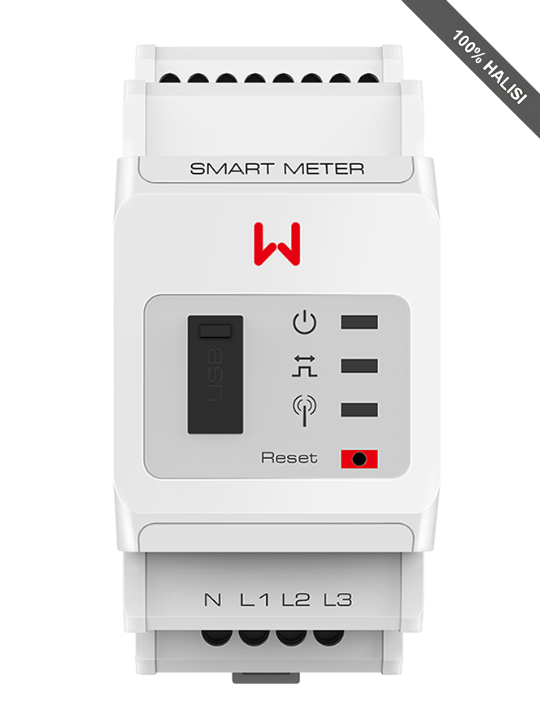
GoodWe - Single and 3 Phase Smart Meter – GM1000, GM1000D, GM3000
GoodWe - Single and 3 Phase Smart Meter – GM1000, GM1000D, GM3000
GoodWe - Single and 3 Phase Smart Meter – GM1000, GM1000D, GM3000
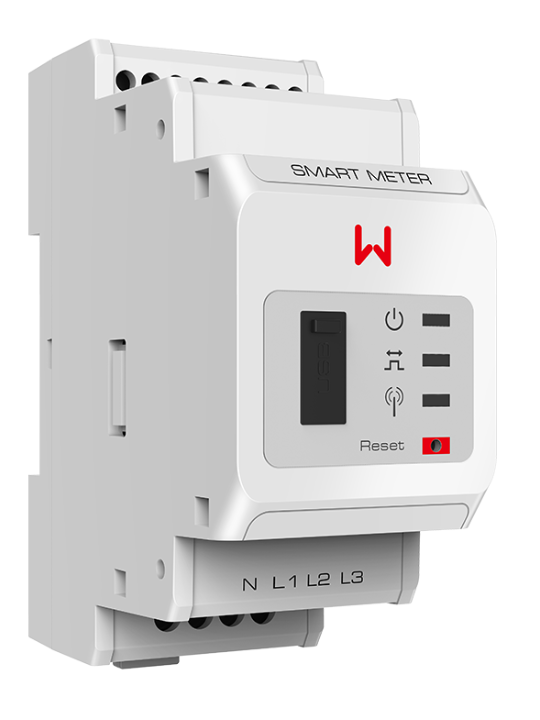
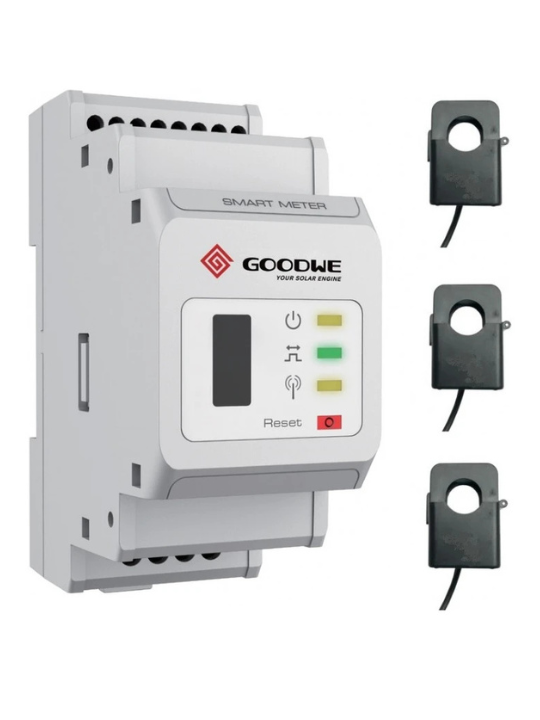
- Supports both single-phase and three-phase power systems for flexible installation.
- Delivers precise readings of voltage, current, power, and energy for reliable monitoring.
- Works perfectly with GoodWe inverters and SEMS systems for advanced energy management.
- Small-scale form factor for easy installation and minimal space usage.
- Enables users to view and manage energy data instantly via SEMS Portal.
- Helps balance load and control grid export, enhancing overall system performance.
- Simple wiring and setup process for both residential and commercial systems.
The GoodWe Smart Meter is a compact, high-precision metering unit designed for monitoring and managing electricity in systems coupled with inverters (especially those by GoodWe) and grid systems. It is offered in single-phase (models GM1000 / GM1000D) and three-phase (model GM3000) versions.It detects voltage, current, power, energy (and in many cases reactive power, power factor, frequency) and communicates with inverter/monitoring systems via RS-485/Modbus.It is intended to work in tandem with inverters to enable functions such as export limitation, self-consumption monitoring, energy management and integration into monitoring platforms (e.g., GoodWe’s SEMS portal).
Features & Benefits
- High-precision measurement: Provides accurate monitoring of voltage, current, power, energy, reactive power and other parameters. This enables better visibility of energy flows, whether for solar PV self-consumption, export monitoring, or load management.
- Compact & modular design: Its small dimensions and DIN-rail compatible mounting make for easier installation in tight electrical enclosures or standard panels. The modular nature simplifies wiring and replacement.
- Single-phase and three-phase variants: This flexibility allows deployment in residential (single-phase) and commercial/industrial (three-phase) settings.
- Integration with inverter & monitoring systems: Because it supports RS-485/Modbus and is designed to work with GoodWe inverters & monitoring platforms (such as SEMS), it enables system-level monitoring, export control, self-consumption optimisation, fault detection and O&M benefits.
- Low self-consumption: With the meter itself consuming minimal power (< 3 W), it contributes negligibly to system losses.
- Ease of installation & wiring guidance: The provided manuals show DIN-rail mounting, CT direction instructions (house→grid), straightforward wiring. This reduces installation time and errors.
- Current Transformer (CT) included (in many cases): Simplifies installation since you don’t have to source separate CTs in many cases.
Use Cases
- Residential solar PV systems: For homes in Tanzania (and elsewhere) that have a grid-tied inverter plus solar PV, the meter can monitor household consumption vs solar generation, measure export (if permitted) and enable features like export limitation (to comply with grid-code or self-consumption policy).
- Small commercial or light-industrial sites: In three-phase installations, the GM3000 version allows monitoring across all phases, enabling load monitoring, energy auditing, and integration with the site inverter/EMS.
- Energy storage + hybrid inverter systems: When a hybrid inverter is combined with batteries, this meter is useful to monitor grid import/export, battery state interactions, and enable logic for self-consumption optimization.
- Micro-grid or off-grid + grid-connected setups: In locales where self-consumption and export rules apply (such as net-metering or feed-in-tariffs), the meter can play a key role in controlling export and providing accurate data for billing or system oversight.
- Monitoring & O&M for installers/aggregators: For solar developers, monitoring platforms can aggregate data from multiple meters, enable remote diagnostics and speed up service calls.
Value Propositions
- Enhanced system visibility: Helps solar system owners and installers in Tanzania gain real-time insight into how much power is generated, consumed, and exported. This transparency supports energy cost savings, helps identify waste, and improves system performance.
- Compliance & export control readiness: As Tanzania’s grid policies evolve (with increasing solar penetration, possible feed-in-tariffs or export limits), this meter equips installations with export limitation features and accurate metering required by utilities or regulations.
- Supports solar + battery integration: With increasing interest in hybrid solar + battery systems (due to grid instability or cost of diesel gensets), this meter enables seamless monitoring and control of complex systems, helping to maximise self-consumption and reduce reliance on the grid or backups.
- Reliability & brand backing: GoodWe is a recognised inverter/energy systems brand globally, which lends confidence to Tanzanian installers and end-users in terms of compatibility, support and spare-parts availability.
- Installer-friendly deployment: The compact, DIN-rail design, CT flexibility, and ease of wiring reduce installation time and field cost — a vital benefit in markets where labour or skilled installer time is at premium.
- Scalability for commercial growth: For larger installations (e.g., hotels, commercial sites, small factories) in Tanzania, the three-phase version enables scalable monitoring and could support multi-site O&M and energy audits — helping business users reduce energy bills and carbon footprint.
Local Market Positioning in Tanzania
- Grid realities: Tanzania’s grid may experience fluctuations, outages, voltage/supply irregularities. The Smart Meter’s specification (voltage range, temperature tolerance) should be aligned with local conditions — while it’s rated for indoor use (IP20) and typical environments, ensure installation in protected enclosures where dust/humidity are managed.
- Installer training and wiring correctness: The manual emphasises correct CT direction (House → Grid) and proper wiring to avoid incorrect data. In Tanzania, ensure installers are trained so that the meter is properly commissioned.
- Export policies & load-shedding context: If the local utility or regulation imposes export limits or penalties, this meter can be marketed as a tool to help meet regulatory compliance and avoid surprise bills.
- Cost sensitivity: Pricing in East African markets is key; highlight total cost of ownership benefits (energy monitoring, improved self-consumption, lower O&M) rather than just upfront cost.
- After-sales support and spare parts: Given remote locations or less-developed supply chains, ensure local distributor/installer can source CTs, RS-485 cables, and offer support. This enhances product value beyond the box.
- Communication & remote monitoring: While the meter supports RS-485, encourage bundling with a monitoring platform (GoodWe’s SEMS) or local compatible monitoring software so Tanzanian users can remotely track performance and alert issues.
- Education and demonstration: Use workshops, demo installations in Tanzania (for example in Dar es Salaam or Eastern regions) to show how the meter helps optimise solar systems, track loads (e.g., for small commercial users) and improve ROI.
- Marketing message tailored to local environment: Emphasise “Know exactly what your solar system is doing”, “Protect your investment”, “Comply with grid export rules”, “Save on your bills by seeing where energy goes” — all framed around Tanzanian context (tariffs, load-shedding, rural electrification, solar adoption).
Technical Specification
| Specification Category | Details |
|---|---|
| Applicable Grid Systems | Single-phase and Three-phase grid connections. |
| Main Functions | Detects voltage, current, power and energy. Works with inverters (including SEMS monitoring systems) for energy management. |
| Voltage Range | GM1000/GM1000D: 110 V ~ 240 V (single-phase),GMK110: 85 ~ 288 V (single-phase),GM3000: Line-to-Line: 172 ~ 817 V; Line-to-Neutral: 100 ~ 472 V |
| Current Range | GM1000/GM1000D: 0.48 ~ 120 A, GM3000: Supports flexible CT input, large current ranges (via CTs) |
| Power Consumption (Self-Consumption) | < 3 W for GM1000/GM1000D/GM3000,For GMK110: ≤ 5 W |
| Ingress / Protection Rating | IP20 (for indoor use) |
| Operating Temperature | Typically –30 °C to +70 °C (GM3000) |
Additional Information
| Weight | N/A |
|---|

Save More
Keep more of your money.With our efficient online operation our savings become your savings

Free Same Day Delivery
Spend over 100,000/- with us and qualify for free delivery in Dar Es Salaam. Standard delivery is just 5,000/-*

100% Warranty Goods
Unlike other online retailers we chose our suppliers carefully ensuring genuine goods backed by genuine warranties

7 Day Return
Something faulty with your product? No problem. We will arrange for an easy pick up and refund of your order within 7 days*.
Shop with complete peace of mind.
*Only available for products delivered in Dar es Salaam
Related products

EVI Power 12.8V 100Ah LiFePO4 Battery with Smart BMS | 1.28kWh Lithium Iron Phosphate Solar Battery | IP65 Rated
Original price was: Tsh 820,000.Tsh 780,000Current price is: Tsh 780,000.

EVI Power 300W Solar Street Light with Motion Sensor & Remote Control – 410 Lumens, 7Ah Lithium Battery, Weather Resistant
Original price was: Tsh 140,000.Tsh 135,000Current price is: Tsh 135,000.
Fortuner Deep Cycle Solar Battery, 12V/7Ah AGM, VRLA Maintenance-Free – FR12-7D
Original price was: Tsh 80,000.Tsh 67,000Current price is: Tsh 67,000.
EVI Power 400W High-Power Solar Street Light No Sensor- 4620lm Brightness, 35AH Battery & 46W Solar Panel
Original price was: Tsh 350,000.Tsh 330,000Current price is: Tsh 330,000.

EVI Power 6000VA/6000W Pure Sine Wave Professional Hybrid Solar Inverter with MPPT Technology – 48VDC Battery Compatible, WiFi Monitoring, Parallel Operation
Original price was: Tsh 3,020,000.Tsh 2,870,000Current price is: Tsh 2,870,000.

EVI Power 48V 105Ah LiFePO4 Rack Mounted Battery Module – 5.04kWh Energy Storage System, 6000+ Cycles at 80% DOD, 5-Year Warranty
Original price was: Tsh 4,430,000.Tsh 4,210,000Current price is: Tsh 4,210,000.

EVI Power 3.6kW Smart Hybrid Solar Inverter 24V, MPPT Charger, WiFi – EVI-SM3600-24
Original price was: Tsh 2,000,000.Tsh 1,880,000Current price is: Tsh 1,880,000.