- Your cart is empty
- Continue Shopping


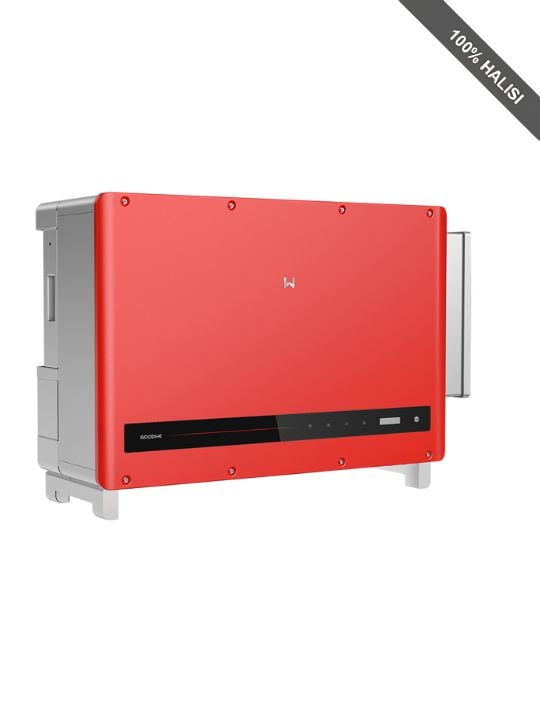
GoodWe HT Series 100 kW,110 kW,120 kW 3‑Phase Grid‑Tie Inverter
GoodWe HT Series 100 kW,110 kW,120 kW 3‑Phase Grid‑Tie Inverter
GoodWe HT Series 100 kW,110 kW,120 kW 3‑Phase Grid‑Tie Inverter
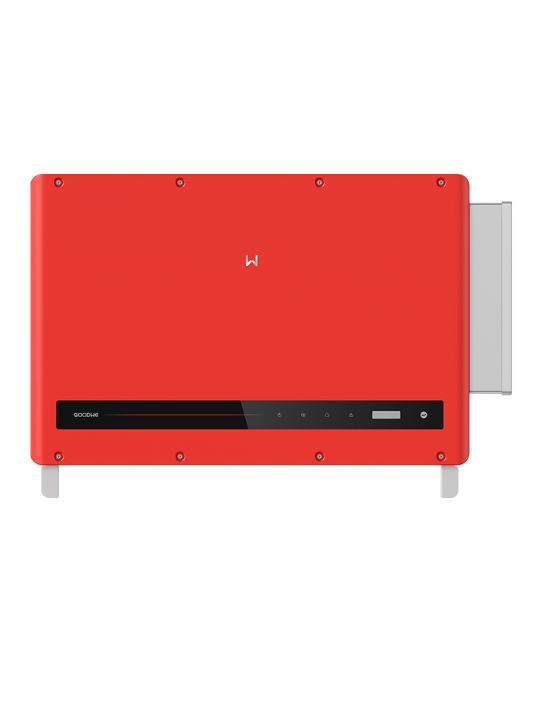
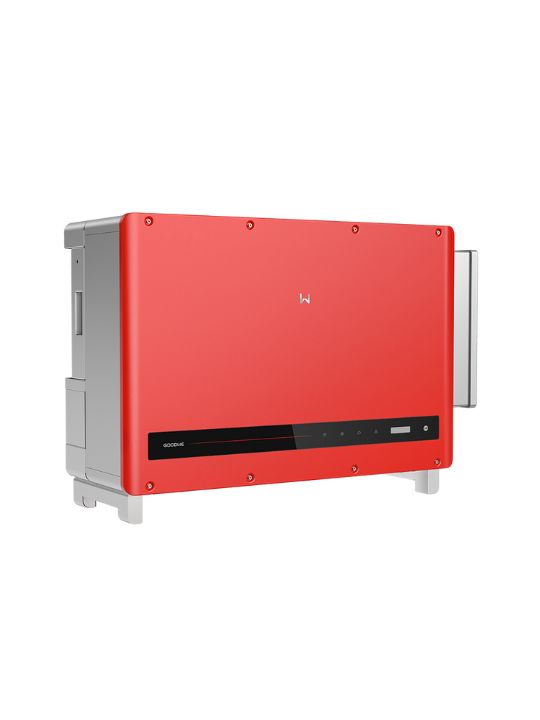
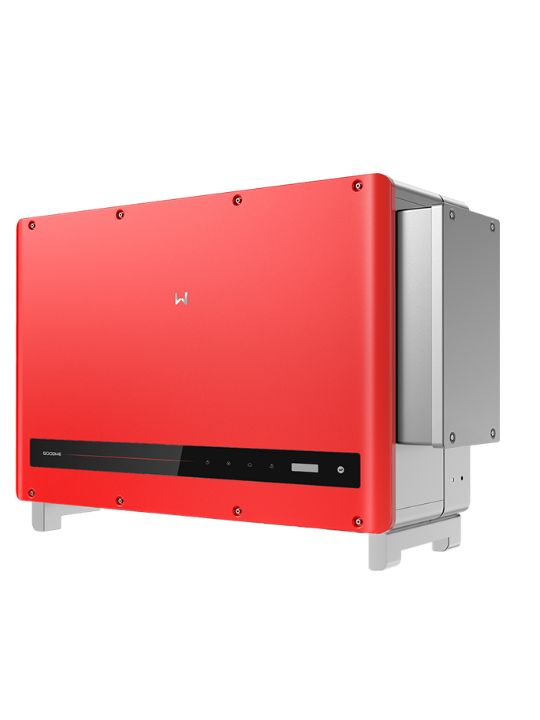
- Power range 100kW / 110kW / 120kW 3-phase grid-tied inverter
- 1100 Vdc high voltage design for optimized system performance
- High efficiency and power density for greater energy yield
- Smart monitoring and control for real-time system management
- Comprehensive safety protection meeting top industry standards
- Durable design to withstand harsh environmental conditions
- Lower LCOE (Levelized Cost of Electricity) for maximum profitability
The GoodWe HT Series (73-120 kW) three-phase grid-tie inverter is designed specifically for commercial & industrial (C&I) solar installations and smaller utility-scale projects. According to the manufacturer, it is “the centrepiece of the clean energy system” for boosting power and profit.The models of interest for the Tanzania market are the 100 kW (GW100K-HT), 110 kW (GW110K-HT) and 120 kW (GW120K-HT) variants.
Features & Benefits
- Multiple MPPTs (up to 12): This allows chains of solar panels in different orientations or partially shaded conditions to be optimised individually, improving energy yield.
- High input voltage (1100 V) and wide MPPT voltage range: Higher voltage systems reduce cable losses and allow longer strings, which is advantageous for rooftop or ground-mounted C&I systems.
- High efficiency (~98.6%): Good conversion efficiency means more of the solar DC power is turned into usable AC output.
- Robust protection & ingress rating (IP66, C5 corrosion): Suitable for harsh environments, outdoor installations without full enclosure – important in Africa/Tanzania where conditions may be challenging.
- String level monitoring and advanced communications: The datasheet mentions support for Bluetooth, WiFi/4G, RS485, PLC communication, plus string-level monitoring and internal humidity/temperature monitoring.
- Low self-consumption (night consumption <2 W): Minimises losses when system is idle.
- Compatibility with bifacial modules: This allows newer solar module technology (bifacial) to be used, increasing yield if panels are mounted appropriately.
- Safety features: Type II surge protection devices (SPD) on both DC and AC sides, residual current monitoring, anti-islanding.
Use Cases
- Rooftop commercial solar installations: For factories, warehouses, hotels, large retail outlets in Tanzania that require 100-120 kW scale PV systems.
- Ground-mounted C&I solar farms: Medium sized off-grid or grid-connected solar parks feeding a commercial/industrial load or the grid.
- Solar + storage setups: Though the HT is not a hybrid inverter by itself, the high reliability, monitoring and grid-tie nature make it well suited for a solar + battery system in commercial applications.
- Small utility/IPP projects: The “small utility” descriptor by GoodWe suggests it can also serve smaller independent power producer (IPP) or distributed generation plants feeding into the Tanzanian grid.
- Harsh environment installations: With IP66 and C5 protection, available for sites that are exposed to dust, humidity, coastal environments etc. Tanzania’s tropical climate and varying conditions would align with such capabilities.
Value Propositions
- Lower levelised cost of electricity (LCOE): By combining high efficiency, high input voltage, multiple MPPTs (thus optimised yield) and reduced installation/operational costs (via string-monitoring and remote communications), the inverter helps drive down the system LCOE. GoodWe claims this explicitly.
- Reduced O&M and installation cost: Features like string-level monitoring, remote firmware updates and Bluetooth configuration reduce on-site labor and maintenance visits.
- Better suitability for African/tropical environments: The robust ingress rating (IP66), extended temperature range, high voltage range and support for bifacial modules make this a future-proof option.
- High adaptability & future compatibility: With support for advanced module types (bifacial), longer strings, high DC input voltage – the system is scalable and ready for evolving module tech and system designs.
- Strong brand backing & global track record: GoodWe is a globally respected solar inverter manufacturer, which provides assurance of support, parts, service and warranty.
Local Market Positioning in Tanzania
- Grid-tie commercial/industrial segment: In Tanzania, many commercial and industrial (C&I) customers are looking for solar to cut energy cost, reduce exposure to utility price hikes, and meet sustainability goals. The GoodWe HT 100-120 kW fits that segment well.
- Competitive edge vs basic inverters: Many installations in Tanzania might still use lower-cost, lower-spec inverters. The HT series can be positioned as a premium but cost-effective option delivering higher yield, more reliability and lower lifetime costs.
- Import/outdoor deployment readiness: Given the Tanzanian climate, the strong protection (IP66, C5 corrosion) is a key differentiator versus cheaper inverters designed for milder climates.
- Partnering with local EPCs: Targeting system integrators, EPCs, solar developers in Tanzania who are looking for high-performance string inverters for 50-300 kW installations.
- Support infrastructure: Ensure local backup for service, parts, warranty claims, training of installers—key for adoption in Tanzania.
- Financing/ROI messaging: Highlight return on investment, pay-back period, yield improvements, ability to handle bifacial modules (which are becoming more attractive) and future-proofing.
- Adaptation to grid conditions: The inverter’s features (grid frequency 45–55 Hz or 55–65 Hz) make it adaptable to Tanzania’s grid. Also, the high voltage DC input allows long string runs and fewer combiner boxes – which is helpful in large rooftop/ground systems in Tanzania.
Technical Specification
| Parameter | Typical value for 100 kW / 110 kW / 120 kW models |
|---|---|
| Max. DC input voltage | 1100 Vdc |
| MPPT operating voltage range | 100 A |
| Max input current per MPPT | 30 A |
| Number of MPPTs | Up to 12 MPPTs for the 110 kW / 120 kW models |
| Nominal output power | 100 kW (GW100K-HT), 110 kW (GW110K-HT), 120 kW (GW120K-HT) |
| Max. efficiency | ~98.6% |
| Operating temperature range | -30°C to +60°C (full load up to +45°C) |
| Safety features | Type II surge protection on DC and AC sides, residual current monitoring, anti-islanding |
Additional Information
| Weight | N/A |
|---|

Save More
Keep more of your money.With our efficient online operation our savings become your savings

Free Same Day Delivery
Spend over 100,000/- with us and qualify for free delivery in Dar Es Salaam. Standard delivery is just 5,000/-*

100% Warranty Goods
Unlike other online retailers we chose our suppliers carefully ensuring genuine goods backed by genuine warranties

7 Day Return
Something faulty with your product? No problem. We will arrange for an easy pick up and refund of your order within 7 days*.
Shop with complete peace of mind.
*Only available for products delivered in Dar es Salaam
Related products

Fortuner 900VA Solar Inverter with LCD Display, 12V/40A MPPT Controller, Deep Cycle Battery Backup System – FR900
Original price was: Tsh 380,000.Tsh 360,000Current price is: Tsh 360,000.

Fortuner 1100VA Solar Wall-Mountable Inverter, LCD Display, 12V/40A MPPT Controller, Battery Compatible – FR1100
Original price was: Tsh 440,000.Tsh 410,000Current price is: Tsh 410,000.

Fortuner 10 KVA Solar Inverter System, 1-Phase Pure Sine Wave, 120V/40A MPPT, LCD Display – FR10000
Original price was: Tsh 4,980,000.Tsh 4,740,000Current price is: Tsh 4,740,000.


EVI Power 1000VA/900W Smart Hybrid Inverter, LCD Display, Fast 20A Charging, 2-Year Warranty
Original price was: Tsh 510,000.Tsh 480,000Current price is: Tsh 480,000.


Tripp Lite 1250W APS X Series 12VDC 230V Inverter/Charger with Auto Transfer Switching
Original price was: Tsh 1,000,000.Tsh 950,000Current price is: Tsh 950,000.