- Your cart is empty
- Continue Shopping


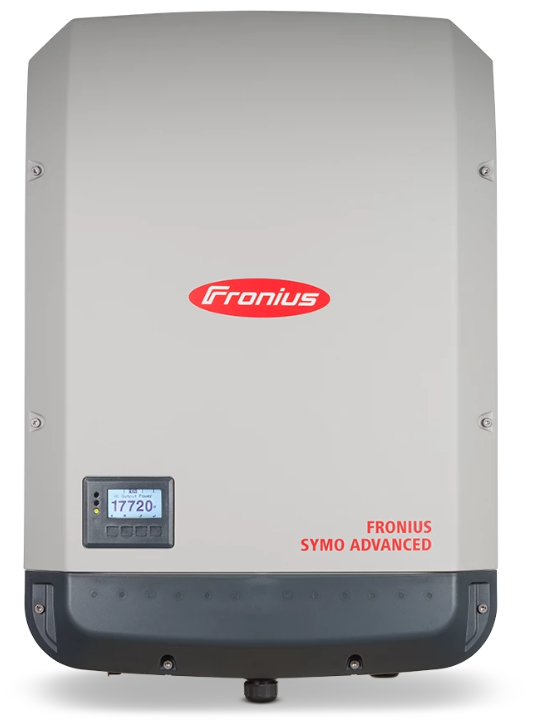
Fronius Symo Advanced 10kw, 12.5kw, 17.5kw, 20kw 3P Grid Tie / PV Inverter
Fronius Symo Advanced 10kw, 12.5kw, 17.5kw, 20kw 3P Grid Tie / PV Inverter
Fronius Symo Advanced 10kw, 12.5kw, 17.5kw, 20kw 3P Grid Tie / PV Inverter

- High Efficiency
- SnapINverter Design
- Dual MPPTs
- Integrated WLAN
- SunSpec Rapid Shutdown
- Compact & Lightweight
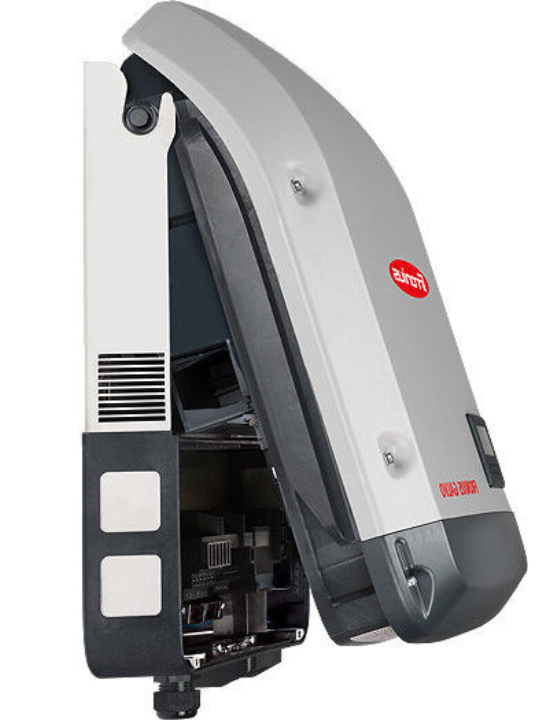
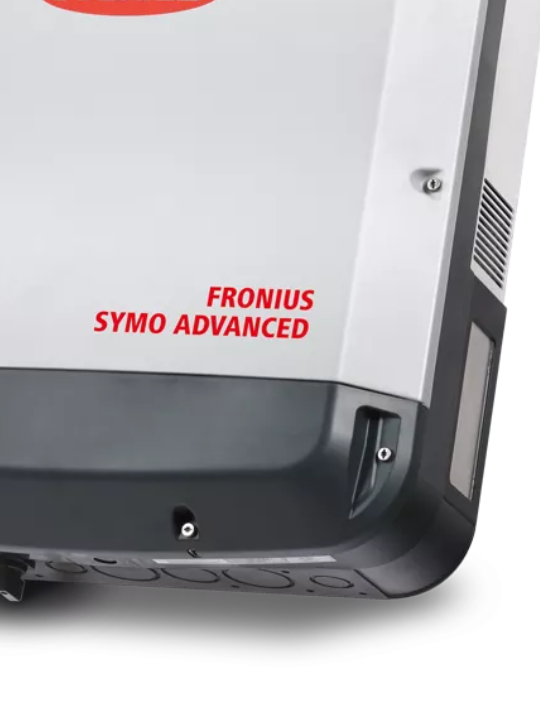
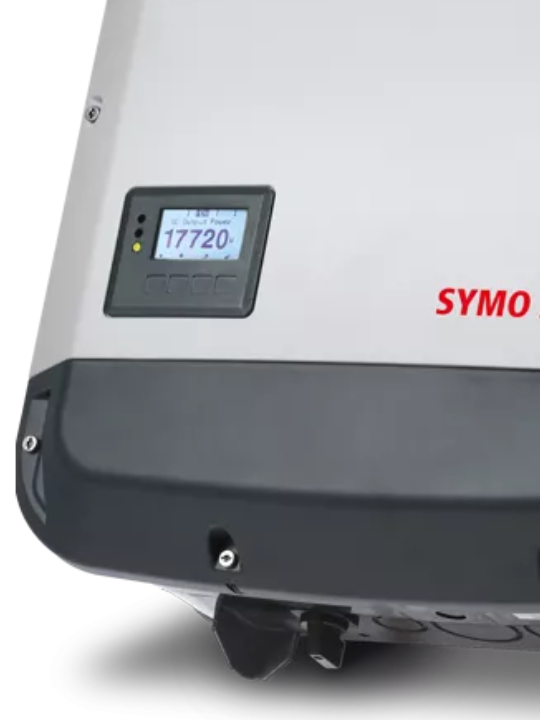
Engineered with safety as a top priority, the Fronius Symo Advanced marks the next evolution in the renowned Fronius SnapINverter series. This inverter unites trusted performance with cutting-edge safety innovations, positioning it as a future-ready solution for commercial photovoltaic systems of any scale. Available in power classes from 10 to 20 kW, the new generation stands out with its dependable arc protection enabled by Fronius Arc Guard technology, versatile SuperFlex Design for complete flexibility in roof configuration, and optimized energy output through the intelligent Dynamic Peak Manager.
Features & Benefits
- Fronius Arc Guard (AFCI) : Improves safety by detecting DC arc faults; reduces fire risk – especially important in areas with potential wiring degradation, high UV, heat, moisture.
- SuperFlex Design: Wide DC voltage range and multiple strings per MPPT allow flexible roof / site layout. Can adapt to partial shading, non-uniform module orientation – useful in terrain or roof shapes common in Tanzania.
- Dynamic Peak Manager: Optimises string level MPP, mitigating losses due to shading without needing expensive module-level power electronics; thus better real-world yields.
- High efficiency (≈97.8-97.9%): Less energy lost in conversion; more power delivered; beneficial given solar irradiance conditions and high module investment costs.
- Wide ambient temperature range (−25 to +60 °C): Handles tropical heat; high temperatures are common in many parts of Tanzania.
- IP66 enclosure: Good protection from dust, rain, humidity – important in many parts of Tanzania (coastal, rural with dust, rainy seasons).
- Multiple interface/communication options: Remote monitoring and diagnostics; helps with maintenance, performance tracking, and potential incentive-/grid-integration requirements.
- Protection features (reverse polarity, DC disconnector etc.): Safety during installation, maintenance, lower risk of damage due to miswiring or local electrical faults.
Use Cases
- Commercial rooftop solar: on warehouses, factories, large shops etc., with 10-20 kW systems.
- Offices / institutions / schools: wanting to feed excess into local grid or zero export but needing safe, reliable performance.
- Agricultural processors / cold storage: where solar helps reduce diesel consumption; in remote or semi-grid areas.
- Mini-grid or grid-tie hybrid setups: in semi-urban or peri-urban settings (if local regulations allow feed-in) — these inverters being robust and flexible help.
- Solar farms or large PV installations: in industrial parks, business hubs.
Value Propositions
- Safety & Reliability: The built-in arc fault detection (Arc Guard), reverse polarity, etc., mean lower risk to installations and people.
- Flexibility in design: Wide MPP voltage ranges, multiple MPPTs, many DC strings per MPPT allow better matching of system design to site constraints.
- High efficiency & yield: With Dynamic Peak Manager and excellent efficiencies, you get more energy output per module, which increases return on investment.
- Tough build for tropical climates: IP66, wide temperature range, AC/DC voltage tolerances suitable for harsh environment.
- Monitoring & support: Good interfaces for data logging, remote monitoring – useful for maintenance.
Local Market Positioning in Tanzania
Grid voltage & connection The inverter supports 3-phase 400/230 V (or 380/220 V) which aligns well with many commercial grid setups in Tanzania. Need to verify local grid supply voltage (often 400 V three-phase) and frequency stability.Altitude If installation is in high-altitude areas (e.g., above 2,000 m), performance may be reduced; the inverter allows higher altitudes under reduced input voltage or somewhat derated power. Confirm site elevation. [The datasheet allows up to 3,400 m under some voltage conditions.]Ambient temperature With ambient temperature up to +60 °C allowed, this is good for hot climates; however, heat dissipation, shade, ventilation should be designed to avoid overheating which can reduce efficiency.Compliance / local certifications Though the inverter meets many international standards, one must check whether Tanzania has specific regulatory or grid-interconnection standards (e.g. utilities may require certain certifications or insurance) and whether this model is certified there.
Technical Specification
| Specification Area | Parameter | 10.0-3-M | 12.5-3-M | 17.5-3-M | 20.0-3-M |
|---|---|---|---|---|---|
| AC / Output Data | Number of MPP Trackers | ~10.0 kW | ~12.5 kW | ~17.5 kW | ~20.0 kW |
| Max. AC output power / AC kVA | approx equal to rated (≈10, 12.5, 17.5, 20 kVA respectively) | – | – | – | |
| AC nominal current | ~14.4 A for 10 kW version (400/230 V, 3~) | ~18 A for 12.5 kW version | ~25.3 A for 17.5 kW | (for 20 kW) similar scaling, likely ~28-30 A depending on voltage, but exact number per datasheet not given in the sources I saw. | |
| Grid / AC connection voltage | Same as above | Same | Same | ||
| AC voltage operating/range | ~150-280 V (per phase) | Same | Same | Same | |
| Frequency | 50 / 60 Hz, nominal 50 or 60 depending on config | Same | Same | Same | |
| Frequency range allowable | ~45-65 Hz | Same | Same | Same | |
| Total Harmonic Distortion (THD) | <3% @ full load (nominal power) | Same | Same | Same | |
| Power factor | 0 … 1 (inductive / capacitive) adjustable under load | Same | Same | Same | |
| DC / Input Data | Number of MPPT trackers | 2 | Same | Same | Same |
| Maximum DC input (input current) per MPPT / total | For 17.5 / 20 kW models: ~33.0 A / 27.0 A per MPPT | For 12.5 kW: ~27.0 A / 16.5 A | Same as above for higher models | For 20 kW similar to 17.5 kW version (per MPPT) | |
| Max. short-circuit current from PV array | ~68.0 A / 55.7 A (for highest power versions) | For 12.5 kW version: ~55.7 / 34 A (depending on MPPT) | Same as 17.5 kW version | — | |
| DC input voltage (min / max) | 200 V – 1000 V | Same | Same | Same | |
| Feed-in start voltage | ~200 V | Same | Same | Same | |
| Nominal input voltage | ~600 V | Same | Same | Same | |
| MPP voltage range (for optimal MPPT) | ~320-800 V for 12.5 kW, and ~370-800 V for 17.5 kW versions | Same pattern | Same | Same | |
| Usable MPP voltage range (start to max) | ~200-800 V | Same | Same | Same | |
| Number of DC input connection points | 3 + 3 (i.e. each MPPT has 3 strings input potential) | Same | Same | Same | |
| Maximum allowed PV array power | For 17.5 kW version: ~26.3 kWpeak | For 12.5 kW: ~18.8 kWpeak | Same for 17.5 kW etc. | For 20 kW version: probably ~30 kWpeak or close (per scaling) — exact from datasheet to confirm. | |
| Efficiency | Maximum efficiency | ~97.8-97.9% for higher power versions (17.5/20) | ~97.8% for 12.5 kW version | ~97.9% for 17.5 kW version | Same as 17.5 kW version |
| European / average efficiency (ηEU) | ~97.6% for 17.5 & 20 kW | ~96.0-97.4% for 12.5 kW version | Same high figure | Same | |
| MPP adaptation efficiency | > 99.9% | Same | Same | Same | |
| General / Mechanical / Environmental | Weight | ~32 kg (12.5 kW) version,~39.8 kg for 17.5 kW version, ~32.1 kg for 10.0 kW version | — | — | — |
| Protection / enclosure rating | IP66 | Same | Same | Same | |
| Ambient temperature operating range | -25 °C to +60 °C | Same | Same | Same | |
| Humidity | 0-100% (non-condensing permitted) | Same | Same | Same | |
| Maximum altitude | 2,000 m with full input voltage; up to ~3,400 m when the input voltage is reduced (or under certain conditions) | Same | Same | Same | |
| Safety, Protection & Features | Arc protection (DC) | Fronius Arc Guard (Arc Fault Circuit Interrupter, AFCI) integrated for reliable arc protection | Same | Same | Same |
| DC isolation measurement | Integrated | Same | Same | Same | |
| Overload performance / Power limiting | Operating point shift, power limiter mode integrated | Same | Same | Same | |
| Reverse polarity protection | Integrated | Same | Same | Same | |
| RCMU (Residual Current Monitoring Unit) | Integrated | Same | Same | Same |
Additional Information
| Weight | N/A |
|---|

Save More
Keep more of your money.With our efficient online operation our savings become your savings

Free Same Day Delivery
Spend over 100,000/- with us and qualify for free delivery in Dar Es Salaam. Standard delivery is just 5,000/-*

100% Warranty Goods
Unlike other online retailers we chose our suppliers carefully ensuring genuine goods backed by genuine warranties

7 Day Return
Something faulty with your product? No problem. We will arrange for an easy pick up and refund of your order within 7 days*.
Shop with complete peace of mind.
*Only available for products delivered in Dar es Salaam
Related products

EVI Power 3.6kW Smart Hybrid Solar Inverter 48V, MPPT Charger, WiFi – EVI-SM3600-48
Original price was: Tsh 2,000,000.Tsh 1,900,000Current price is: Tsh 1,900,000.
EVI Power 6kVA Smart Hybrid Solar Inverter 48V, Pure Sine Wave, MPPT Charger, WiFi – EVI-SM6000-48
Original price was: Tsh 3,000,000.Tsh 2,810,000Current price is: Tsh 2,810,000.
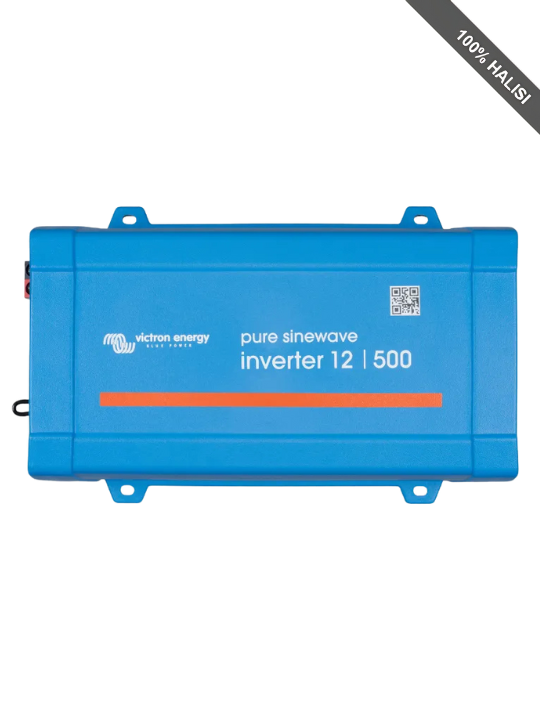

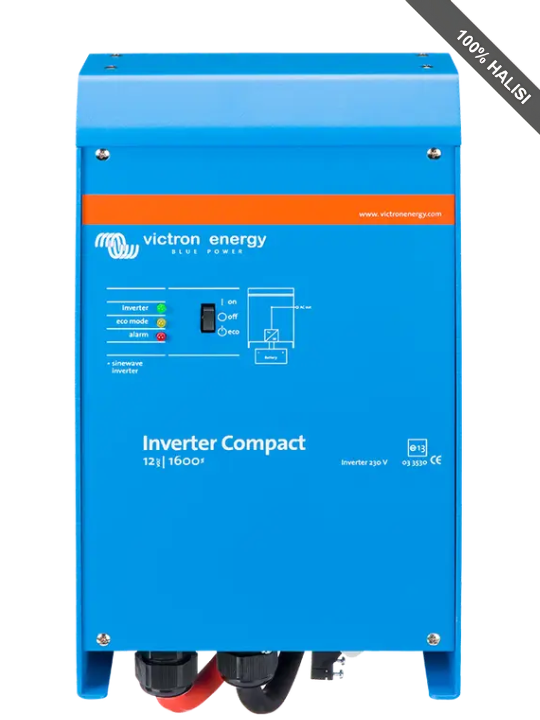
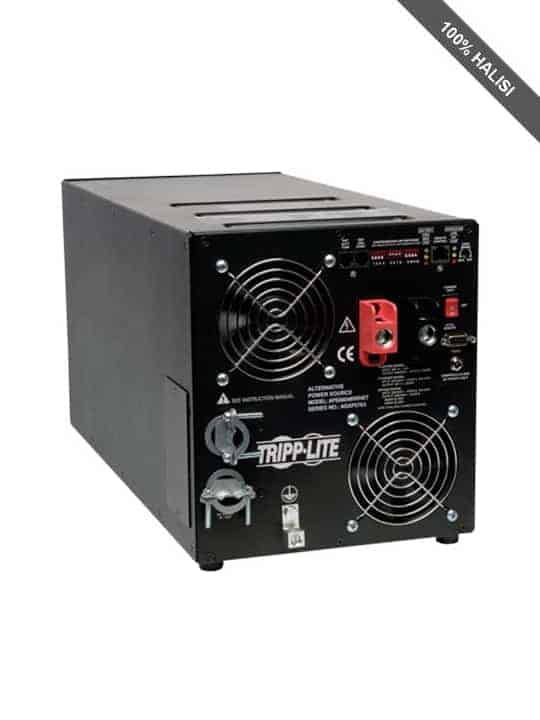
Tripp Lite APS X 6000W Pure Sine-Wave Output Inverter Charger Voltage Regulation
Original price was: Tsh 7,312,000.Tsh 6,960,000Current price is: Tsh 6,960,000.
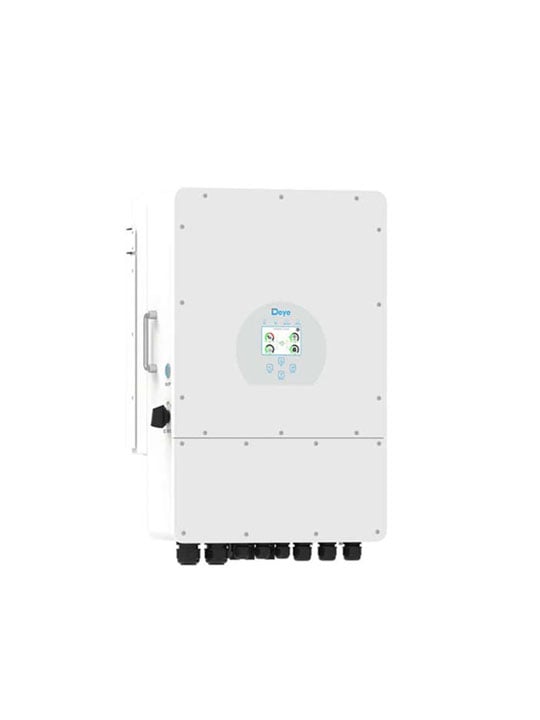
Deye 12kW Three-Phase Hybrid Solar Inverter, 48V Battery, Dual MPPT – SUN-12K-SG04LP3-EU
Original price was: Tsh 8,550,000.Tsh 8,020,000Current price is: Tsh 8,020,000.

EVI Power 6000VA/6000W Pure Sine Wave Professional Hybrid Solar Inverter with MPPT Technology – 48VDC Battery Compatible, WiFi Monitoring, Parallel Operation
Original price was: Tsh 3,020,000.Tsh 2,870,000Current price is: Tsh 2,870,000.