- Your cart is empty
- Continue Shopping


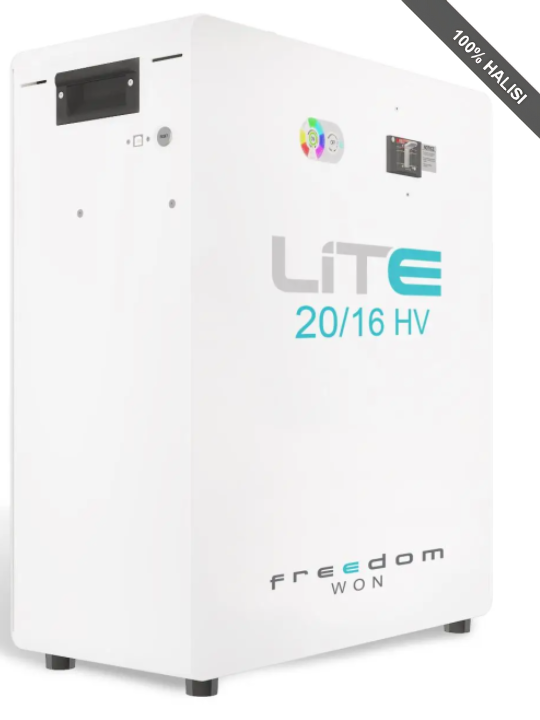
Freedom Won – Lite Home 15kWh, 20kWh, 30kWh – HV LifePO4 Battery
Freedom Won – Lite Home 15kWh, 20kWh, 30kWh – HV LifePO4 Battery
Freedom Won – Lite Home 15kWh, 20kWh, 30kWh – HV LifePO4 Battery

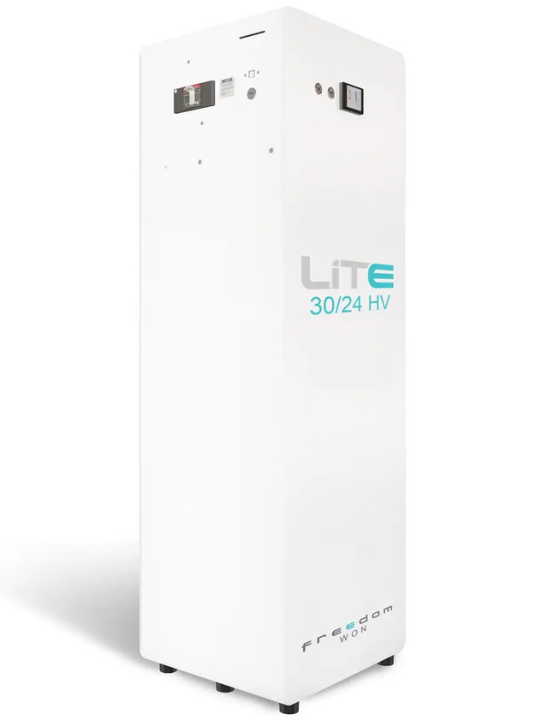

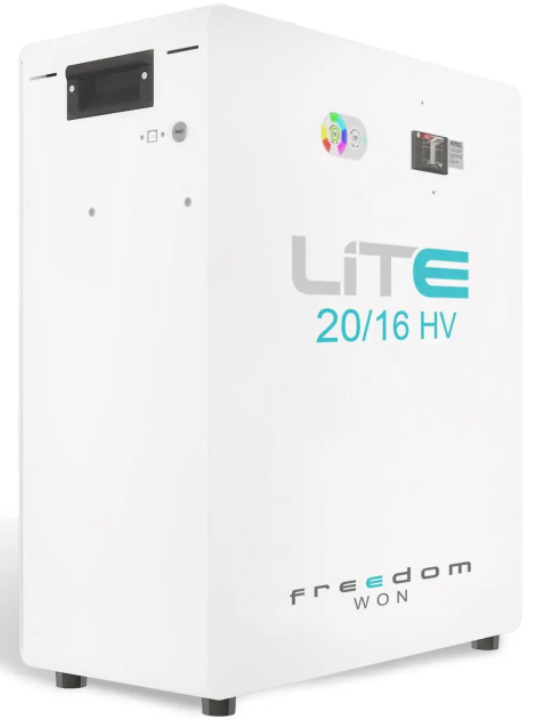
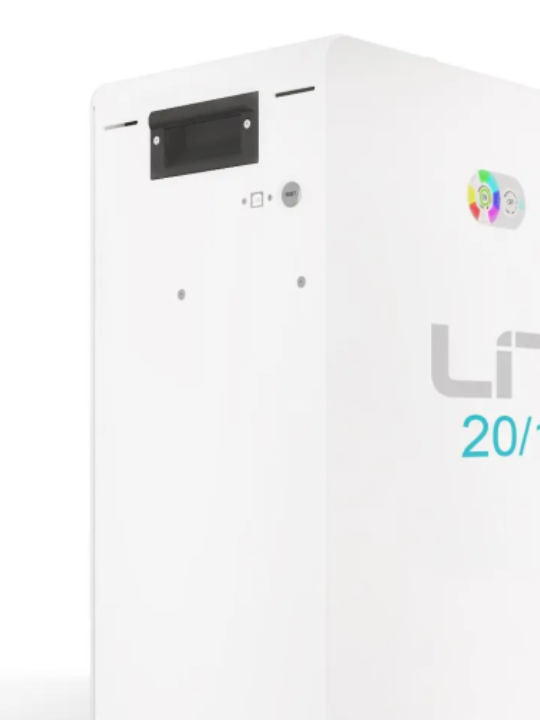
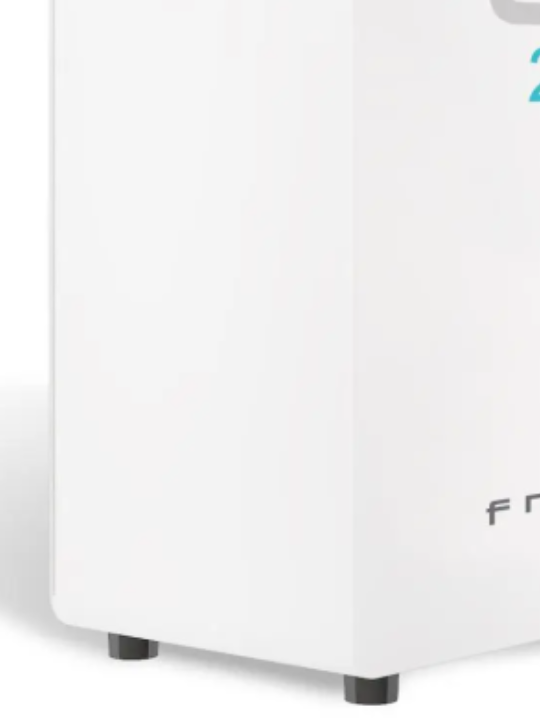
- High-performance LiFePO₄ battery built for long life, reliability, and safe home energy storage.
- Stores excess solar power for night-time use, helping reduce electricity bills and generator fuel costs.
- Strong discharge capability supports heavy household loads, perfect for Tanzanian homes facing frequent outages.
- Available in 15kWh, 20kWh, and 30kWh options to match small, medium, or large energy needs.
- High-voltage design improves efficiency, reduces wiring losses, and pairs seamlessly with modern inverters.
- Intelligent BMS with safety protection ensures stable operation and peace of mind.
The Freedom Won LiTE Home HV series is a high-voltage, LiFePO₄ (Lithium Iron Phosphate) stationary battery system offered in three capacities for home/residential use: 15 kWh, 20 kWh, and 30 kWh total energy capacity. These systems are designed for integration with solar, inverter and backup power setups, offering homeowners in Tanzania improved reliability, longer lifespan and better fault tolerance compared to conventional battery systems. The manufacturer emphasises durability, safety, and compatibility with high-voltage inverter architectures.
Features & Benefits
Here are the key features of the LiTE Home HV range and how they translate into benefits:
- High usable capacity: With 80% DoD usable and capability for 90% DoD, the system allows a large portion of stored energy to be used each day. E.g., the 30 kWh model yields ~24 kWh usable at 80%.
Benefit: Homeowners can draw substantial stored energy during evenings or outages, improving self-consumption of solar and reducing reliance on the grid or backup generators. - High discharge power capability: For example the 30 kWh model supports up to ~46 kW max discharge power and ~30 kW continuous.
Benefit: The battery can support heavy loads (air-conditioners, pumps, appliances) or rapid discharge demands during outages without failure. - Long service life & warranty: The range is backed by a 10-year/4,000 cycle warranty at 80% DoD, with expected life of 13-15 years or more at 70% DoD or 50% DoD usage.
Benefit: Reduces lifetime replacement cost, gives peace of mind for Tanzanian homeowners investing in solar + storage. - High-voltage architecture: Nominal voltages from 153 V up to 307 V in this series (depending on model); designed to integrate with modern HV inverters.
Benefit: Lower current for a given power, which means smaller cable sizes, less loss and more efficient installation—important where wiring cost and system losses matter. - Safety & robust control: Built-in shunt-trip circuit breaker for overcurrent, cell under/over voltage, temperature, weak cell detection; human interface with SoC display and error light; CAN bus for diagnostics.
Benefit: High reliability, reduced risk of fire or failure—critical in homes and locations where service infrastructure may be less accessible. - Compact design (for the capacity): While heavy, the units are relatively compact given the storage size (especially compared to old lead-acid systems).
Benefit: Permits installation indoors or in under-cover locations; for Tanzanian homes where space may be limited this is advantageous. - Flexibility / modularity: The manufacturer allows selection of the capacity that matches the household’s needs now, with possibility to expand in future.
Use Cases
In the Tanzanian context, typical residential use-cases include:
- Solar + Battery Home System: A home with a solar PV array can store daytime excess solar generation in the LiTE battery and use it during evening hours or night, thus maximising self-consumption and reducing utility electricity purchase.
- Grid Outage Backup: In areas where the grid supply is unreliable or experiences frequent outages (load-shedding, voltage dips), the LiTE system can provide a reliable stored energy reserve to keep lighting, refrigeration, pumps or essential loads running during outage events.
- Peak-Tariff / Time-of-Use Optimization: If utility tariffs or metering structures favour off-peak charging and on-peak discharging (or if the homeowner uses a diesel generator with high fuel cost), the battery allows shifting loads/time-shifting for cost savings.
- Load-Voltagedrops/Equipment Protection: For homes with sensitive electronics, the battery/inverter system can provide smoother, cleaner power compared to fluctuating grid supply, protecting electronics and appliances.
- Future Expansion / Smart Home Integration: As the homeowner’s energy consumption grows (EV charging, more appliances, home office), the battery system supports scaling (within limits) and integrating with smarter home energy management.
Value Proposition & Local Market Positioning (Tanzania)
- Addressing Power Reliability Needs: In Tanzania, many households face grid instability, voltage fluctuations and occasional outages. This product offers a robust battery solution that helps homeowners mitigate these issues and gain more dependable energy supply.
- Reducing Diesel Generator Use & Import Fuel: Where homeowners or small businesses currently rely on diesel generators during outages, a high-capacity LiFePO₄ battery reduces generator run time, fuel cost, noise and maintenance burden – which is very relevant in the Tanzanian market.
- Cost Savings via Solar Integration: Pairing the LiTE battery with a solar PV system enables increased self-consumption and less reliance on purchased electricity or backup fuel. Over time, this means improved ROI for home solar investments.
- Long Life & Lower Maintenance: The long cycle life and robust chemistry mean fewer replacements, less downtime and less maintenance compared with traditional batteries (lead-acid or low-quality lithium). In Tanzania, where technical service visits may be more difficult, this is a strong advantage.
- Future-Proof & Scalable: Because the product is HV compatible, it matches modern inverters used in solar installations, which helps installers and homeowners avoid mismatches. This positions it as a premium but forward-looking choice.
- Brand & Service Confidence: Freedom Won is described as “Africa’s Largest Lithium Battery Manufacturer” and has an established product range. For Tanzanian buyers this may offer confidence in supply chain, technical support and parts availability.
- Competitive Edge in Home Market: While several battery brands are available in Tanzania, many may focus on low-voltage systems or lower quality chemistry. This HV home-range positions itself as a premium-tier option for homeowners who want higher performance, longer life and better system integration.
Local Considerations for Tanzania
- Installer and Inverter Compatibility: Ensure the inverter chosen in Tanzania for home installation is compatible with the high-voltage LiTE battery’s nominal voltage (e.g., 153 V or 307 V depending on model) and that local installer has experience with HV battery systems. The manufacturer emphasises this point.
- Climate & Ambient Conditions: The specification notes current limits are rated for battery temperatures of 10°C–25°C, and there is de-rating outside this range. In Tanzania, with higher ambient temperatures, it will be important to ensure good ventilation, shading and possibly climate-control for the battery enclosure to preserve lifespan.
- Placement & Protection: The enclosure is rated IP20 (for indoor or fully covered under-cover use) in the models looked at. Outdoor installation without proper enclosure may affect safety or longevity.
- Service / Warranty Availability: When purchasing in Tanzania, confirm that warranty terms are honoured locally and that spare parts/service support is available. The long life projection of the battery is only worthwhile if maintenance and service are accessible.
- Cost vs ROI: While the up-front cost may be higher than traditional batteries, the total cost of ownership (long life, less maintenance, higher performance) should be considered. For Tanzanian homeowners looking at solar + storage, highlighting the long-term savings and reduced generator/fuel costs is key.
- Sizing for Load Profile: Homeowners should size the battery based on their actual overnight load, outage frequency and solar generation patterns. For example, a modest household in Tanzania might be well-matched with the 15 kWh model; larger homes or those with heavy evening loads might prefer the 30 kWh.
- Regulatory / Incentive Landscape: If Tanzania has any subsidies, tax incentives or net-metering regimes for solar + storage, referencing them in offering the LiTE battery can strengthen the value proposition to customers.
Technical Specification
| Specification | Model: 15 kWh (15/12 HV) | Model: 20 kWh (20/16 HV) | Model: 30 kWh (30/24 HV) |
|---|---|---|---|
| Total Energy Capacity | 15 kWh | 20 kWh | 30 kWh |
| Usable Energy @ 80% DoD | ~12 kWh | ~16 kWh | ~24 kWh |
| Usable Energy @ 90% DoD | ~13.5 kWh | ~18 kWh | ~27 kWh |
| Nominal Voltage | 153 V approx. [Note: for 15kWh model] | 204 V | 307 V |
| Max / Continuous Discharge Current | 150 A / 80 A (15kWh) | 150 A / 80 A (20kWh) | 150 A / 100 A (30kWh) |
| Max / Continuous Discharge Power | ~20 kW / ~12 kW (15kWh) approximate | ~30 kW / ~16 kW (20kWh) | 46 kW / 30 kW (30kWh) |
| Max / Min Operating Voltage | ~170 V / ~137 V (15kWh) | 227 V / 182 V | 341 V / 273 V |
| Dimensions (H × W × D) | 745 × 490 × 290 mm [~15kWh model] | 745 × 640 × 290 mm | 1 260 × 490 × 290 mm |
| Weight | ~130 kg (15kWh) | 173 kg | 254 kg |
| Enclosure / Protection | Aluminium painted white, indoor or fully-protected under cover, IP20 rating for home models | ||
| Warranty / Life Expectancy | 10 years or 4,000–6,000 cycles (depending on model) at ~80% DoD; expected lifetime 13-15 years at ~70% DoD, up to 15-20 years at ~50% DoD. |
Additional Information
| Weight | N/A |
|---|

Save More
Keep more of your money.With our efficient online operation our savings become your savings

Free Same Day Delivery
Spend over 100,000/- with us and qualify for free delivery in Dar Es Salaam. Standard delivery is just 5,000/-*

100% Warranty Goods
Unlike other online retailers we chose our suppliers carefully ensuring genuine goods backed by genuine warranties
7 Day Return
Something faulty with your product? No problem. We will arrange for an easy pick up and refund of your order within 7 days*.
Shop with complete peace of mind.
*Only available for products delivered in Dar es Salaam
Related products

EVI Power 8-Way Solar PV Combiner Box with DC SPD, 32A 500V Protection System, 2-Input Solar Array Combiner
Original price was: Tsh 260,000.Tsh 240,000Current price is: Tsh 240,000.

EVI Power 12.8V 100Ah LiFePO4 Battery with Smart BMS | 1.28kWh Lithium Iron Phosphate Solar Battery | IP65 Rated
Original price was: Tsh 820,000.Tsh 780,000Current price is: Tsh 780,000.
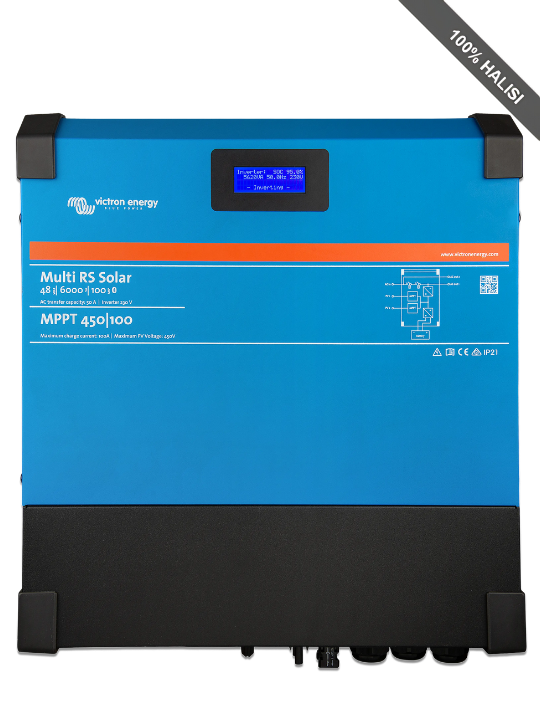
Victron Energy Multi RS Solar 6000VA Inverter/Charger 10-VIC-0408
Original price was: Tsh 6,900,000.Tsh 6,240,450Current price is: Tsh 6,240,450.

EVI Power MC4 Branch Connector 2-to-1 Male/Female Set
Original price was: Tsh 30,000.Tsh 25,000Current price is: Tsh 25,000.

EVI Power 48V 105Ah LiFePO4 Rack Mounted Battery Module – 5.04kWh Energy Storage System, 6000+ Cycles at 80% DOD, 5-Year Warranty
Original price was: Tsh 4,430,000.Tsh 4,210,000Current price is: Tsh 4,210,000.

EVI Power 300W Solar Street Light with Motion Sensor & Remote Control – 410 Lumens, 7Ah Lithium Battery, Weather Resistant
Original price was: Tsh 140,000.Tsh 135,000Current price is: Tsh 135,000.

EVI Power DC MCCB, 1 Pole, 160A, 1 Year Warranty
Original price was: Tsh 110,000.Tsh 97,000Current price is: Tsh 97,000.

EVI Power 6000VA/6000W Pure Sine Wave Professional Hybrid Solar Inverter with MPPT Technology – 48VDC Battery Compatible, WiFi Monitoring, Parallel Operation
Original price was: Tsh 3,020,000.Tsh 2,870,000Current price is: Tsh 2,870,000.