- Your cart is empty
- Continue Shopping


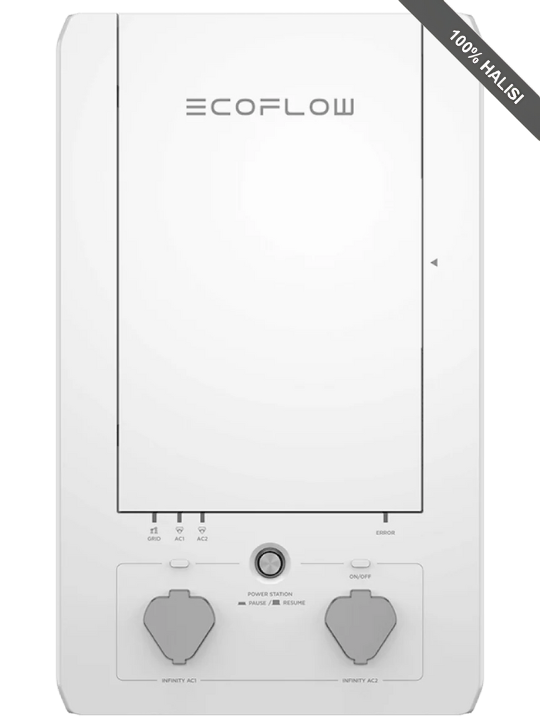
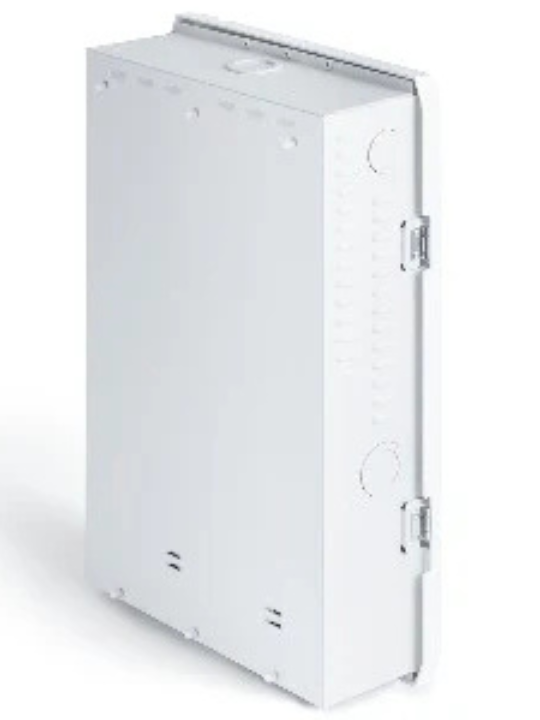
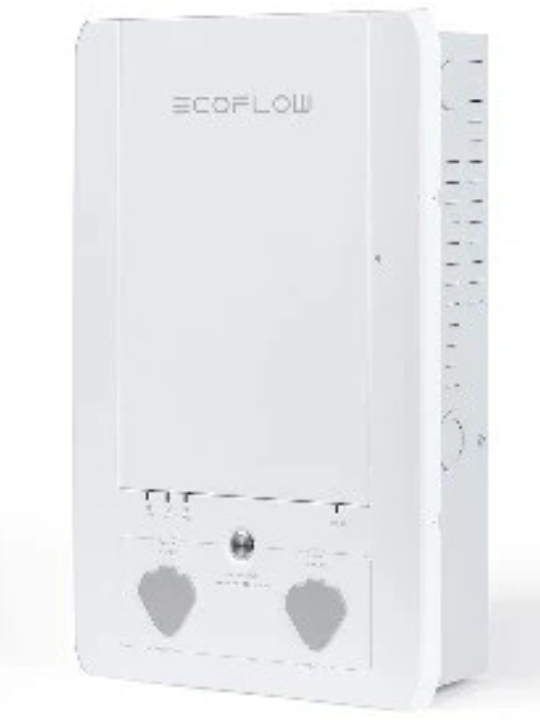
EcoFlow Smart Home Panel
EcoFlow Smart Home Panel
EcoFlow Smart Home Panel
Tsh 3,688,800
- Runs high-power equipment like dryers, HVAC systems, and water heaters.
- Monitor energy usage and switch circuits on or off remotely via the EcoFlow app.
- Connects directly to DELTA Pro / DELTA Pro Ultra systems for automatic backup power.
- Automatically prioritizes circuits and manages loads efficiently to extend battery life.
- Supports multiple battery systems for higher capacity and longer backup times.
The EcoFlow Smart Home Panel (SHP) is designed to sit between your main breaker board and selected home circuits, enabling them to be powered by either the grid or a battery system (for example the EcoFlow DELTA Pro) with intelligent switching and load-management. According to the manufacturer it supports up to 7,200 W AC output when two DELTA Pro units are connected.
Features & Benefits
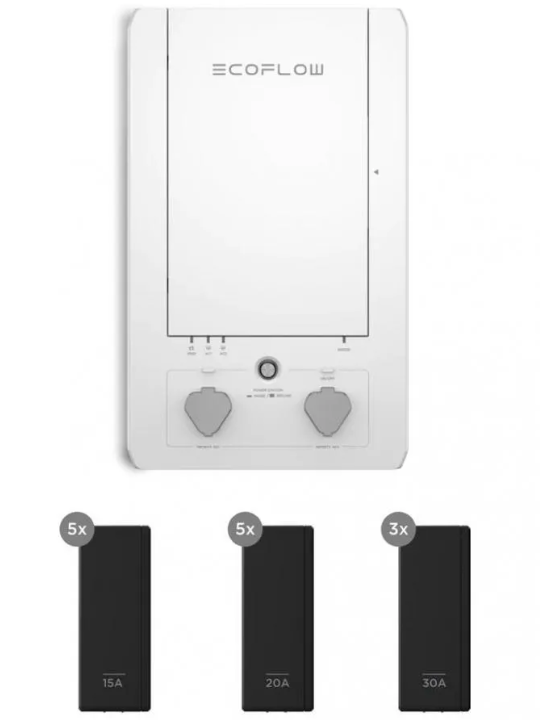
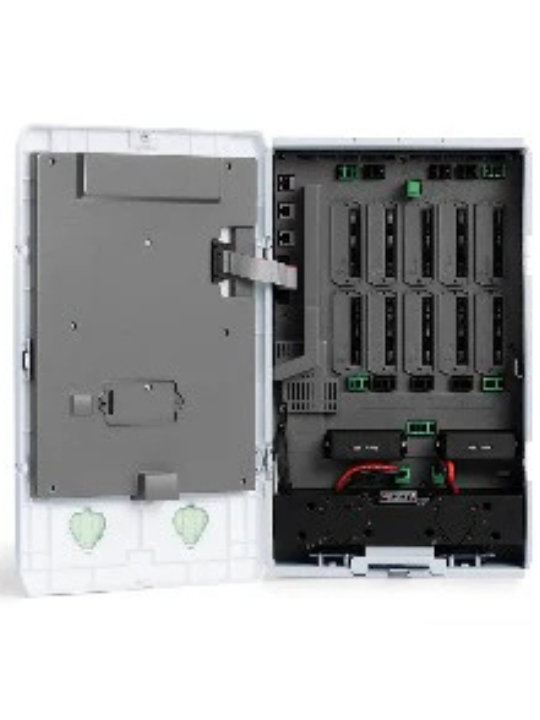
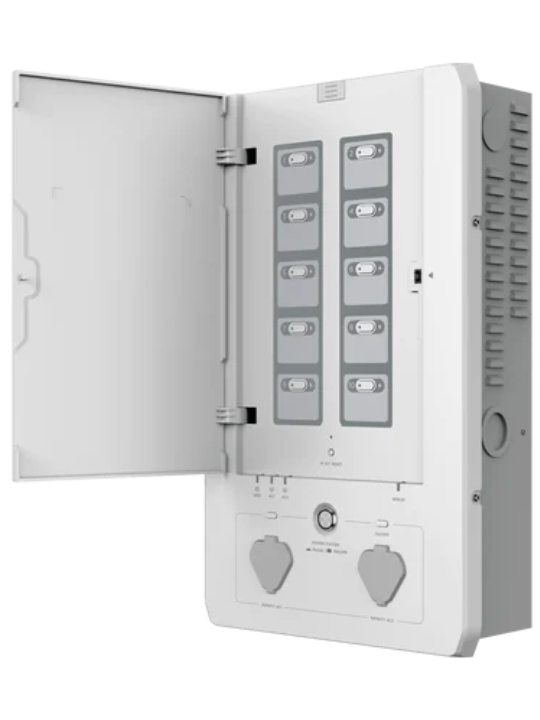
- Circuit-level control: You decide which individual circuits (up to 10) will be backed up, prioritising key loads (lighting, refrigerator, freezer, water pump, etc).
- Automatic transfer: In the event of a grid outage, the system switchover is in the order of milliseconds (20 ms cited in blog) so that connected circuits continue to receive power from the battery system.
- Smart energy management: Via the EcoFlow app you can monitor energy use, battery levels, control circuits, and schedule battery discharge/charge to manage costs or minimise grid draw.
- Expansion & flexibility: Compatible with EcoFlow DELTA Pro units, extra batteries, and even solar or generator input. Useful for homes looking to scale up backup or off-grid capability.
- High-load capacity: With up to 7,200 W output, even relatively heavy appliances (e.g., dryers, large pumps, water heaters) can be supported when properly configured.
Use Cases
- Residential homes with unreliable grid: In many areas in Tanzania, grid supply may be intermittent, voltage may fluctuate, or blackouts may occur. This Smart Home Panel can offer backup for key circuits (lighting, fridge, freezer, pumps) and keep a home functional during outages.
- Homes with solar-battery systems: If a homeowner has or plans to install solar panels + battery storage, the Smart Home Panel allows seamless switching and load management, maximising the value of stored energy and enabling self-consumption.
- Small commercial-/business-use (e.g., guesthouses, lodges, offices): Where uptime is critical (e.g., refrigeration, lighting, telecoms), this system can help maintain essential circuits while controlling cost.
- Load-shedding management: With selected circuits chosen for backup, during grid supply the system can shift some loads to battery when tariffs are high or grid unreliable, helping manage cost and independence.
- Future-proofing for EV / high-load appliances: As Tanzanian households adopt higher-load appliances (e.g., larger air conditioners, EV charging) the capacity (7,200 W) positions the house for more demanding loads beyond simple backup.
Value Propositions
- Reliability & resilience: With the ability to support large loads and selected circuits during outage, homeowners gain a strong fallback when grid supply fails.
- Cost savings potential: Though tariffs may differ, the ability to shift battery discharge to peak grid times or avoid costly generators improves economics.
- Smart load prioritisation: The panel gives homeowners control over which circuits matter most, meaning the battery can be used most effectively (not wasted powering everything indiscriminately).
- Integration-ready for renewables: As solar installations expand in Tanzania, the panel supports coupling with storage and solar input, enhancing overall system efficiency.
- Scalable investment: Homeowners can begin with a modest setup (one battery + Smart Panel) and expand later as needs grow.
Local Market Positioning in Tanzania
- Grid frequency compatibility: The product supports 50 Hz systems — suitable for Tanzania.
- Installation by qualified electrician required: It must be installed by a licensed electrician with adherence to local wiring and safety codes. Local technical capability must be assessed.
- Indoor installation (IP20): Since the IP rating is IP20, the device should be installed in a clean, dry interior environment—this matters for Tanzanian homes with varying conditions.
- Sizing and homework: Given local load profiles may differ (types of appliances, pump sizes, etc), it is essential to size the battery + circuits carefully so as not to overload the system.
- Cost vs. alternative backup: Compared to diesel generators or simpler UPS systems commonly used in Tanzania, the Smart Home Panel offers more sophistication but at higher initial cost. The value will depend on the frequency of outages, cost of fuel/generator maintenance, solar cost, etc.
- Availability of compatible EcoFlow ecosystem: To fully utilise the capabilities (up to 7,200 W output, large battery capacity, smart app features) the home needs compatible batteries/inverter (EcoFlow DELTA Pro or similar) and possibly solar input. The local supply chain, spare parts, and service network should be confirmed.
- Awareness of import duties/taxes/customs: Equipment imported to Tanzania may face tariffs or customs issues; local sellers/importers should factor these into cost and support.
- Maintenance & warranty support: The product comes with a stated 3-year warranty in some regions. Ensuring local support (service, parts) will enhance buyer confidence.
Technical Specification
| Specification | Details |
|---|---|
| Output Voltage | 240 V AC |
| System Frequency | 50 Hz |
| Maximum Backup Power (with 1 battery/inverter system) | 3,600 W |
| Maximum Backup Power (with full dual-battery/inverter system) | 7,200 W |
| Number of Controlled Circuits | 10 circuits |
| Maximum Connected Battery Energy | Up to ~21.6 kWh (for the standard version) |
| Charging Input (via compatible EcoFlow battery / inverter) | Up to 3,400 W max |
| Rate Current (for circuits) | 6A, 16A, 30A options (depending on relay modules) |
| Installation | Wall-mount; must be installed by a licensed electrician (qualified) |
| Weight | 9.00 kg |
|---|

Save More
Keep more of your money.With our efficient online operation our savings become your savings

Free Same Day Delivery
Spend over 100,000/- with us and qualify for free delivery in Dar Es Salaam. Standard delivery is just 5,000/-*

100% Warranty Goods
Unlike other online retailers we chose our suppliers carefully ensuring genuine goods backed by genuine warranties

7 Day Return
Something faulty with your product? No problem. We will arrange for an easy pick up and refund of your order within 7 days*.
Shop with complete peace of mind.
*Only available for products delivered in Dar es Salaam
Related products

EVI Power MC4 Branch Connector 2-to-1 Male/Female Set
Original price was: Tsh 30,000.Tsh 25,000Current price is: Tsh 25,000.

EVI Power 51.2V 100Ah LiFePO4 Wall Mounted Battery Pack with LCD Display – 5.12kWh Capacity, 80% DOD 6000+ Cycles, 5-Year Warranty (EVIA100LFP-51.2W)
Original price was: Tsh 4,830,000.Tsh 4,600,000Current price is: Tsh 4,600,000.

EVI Power Black Flexible 6mm² Solar Cable Per Meter MOQ Divisible by 10
Original price was: Tsh 15,000.Tsh 12,000Current price is: Tsh 12,000.

EVI Power 300W Solar Street Light – 7920lm Brightness, 50Ah Lithium Battery, 90W Solar Panel
Original price was: Tsh 530,000.Tsh 500,000Current price is: Tsh 500,000.
EVI Power 400W High-Power Solar Street Light No Sensor- 4620lm Brightness, 35AH Battery & 46W Solar Panel
Original price was: Tsh 350,000.Tsh 330,000Current price is: Tsh 330,000.

EVI Power 3.6kW Smart Hybrid Solar Inverter 24V, MPPT Charger, WiFi – EVI-SM3600-24
Original price was: Tsh 2,000,000.Tsh 1,880,000Current price is: Tsh 1,880,000.

EVI Power DC Fuse Holder With Fuse, 2 Pole 30A
Original price was: Tsh 50,000.Tsh 38,000Current price is: Tsh 38,000.